I am a mess. But I’ve never been more excited to be messy. My physical and mental health are in constant flux, no two days are the same and it’s exhausting. I guess this is healing? Today, that’s what I’m telling myself.
Thoughts are not facts
I find myself stating the above words when my mind, my thoughts, and my emotions are running away from me. I say them aloud and I say them to myself when I can feel the physical manifestations of my negative trains of thought. I have to stop the downward spiral. It’s not productive. It’s not helpful. It serves no purpose. But that’s the trap of chronic illness, that’s the trap of illness in general. We never know what tomorrow will bring, hell, I don’t know what the next hour will bring.
What’s it like to have MS?
I saw a young woman with ALS explain the frustration of a neuro degenerative disease in the most perfect way. Never before had anyone so simply, so perfectly summed up my physical limitations in an easy-to-grasp way. Humor me. Put your left hand flat on a table. Tuck all your fingers under your palm except your left ring finger. Now, try and lift the ring finger. If you are tuned into your body and paying attention you can feel the muscles in your forearm and wrist contract. Your ring finger might wiggle or move a bit from side to side, but it won’t lift up. You can feel the thought, the nerve path, the muscle activation happening. You can also feel, in the pit of your stomach, the will to make that ring finger move. You know, moments ago, that finger moved and lifted with ease when your palm was flat. But no matter what you do, no matter what you think or how you feel, it won’t lift. If you then untuck all your fingers so your palm is once again on the table, you can lift your ring finger off the table in isolation.
That exercise is my daily experience with movement. But magnify it to things most people take for granted. Have you thought today about balance? The mechanics of walking? Lifting your legs? Pointing your toes? Have you thought about the freedom you have to move around, up and down, side to side, twisting, squatting, turning? Have you considered how easy it is to do any of those things and add something else? Like carrying a basket, a cup of tea, or clothing or balancing while chopping, cooking, cleaning? Probably not. I think about everything. I wonder what I can do. I’m surprised when there is no pain. I’m elated when something is easy. But that is not the norm. Discomfort, adjustments, and accommodations are my norm to get things done, to keep living.
A bumpy road +six months to present
I recently spent 80 minutes chatting to my doctor… 80 minutes! That much time with a medical processional should be counted like we do dog years. The wonderful man gave me 80 minutes of his undivided attention — no nurses, no fellows, no researchers, no residents. It was me and him. And you know what, the visit started with me asking him to break up.
The last eight months of post transplant life have been a shit show when it comes to coordinated care. Shingles was awful. The care I received inpatient in my multiple hospitalizations was sloppy. I had to fight to overturn my insurance denial for acute rehab — which I did — but I’m still waiting three months later to be reimbursed. Taking your money is a priority, returning it is on no one’s agenda. I’ve been contacted by doctors I have never interacted with ordering tests I’ve never heard of and still all I want (and have repeatedly asked for) is a measly calendar of what to expect post transplant.
Spoiler alert: we did not break up. My doctor is the best. I can tell him I am hurt, I am struggling, and I want more from my care team and he listens and responds. He doesn’t just hear me, he validates my feelings and shares his response. He spent 80 minutes listening to my frustrations, hearing me curse, handing me tissues when I cried. He went test by test through the items ordered and we came up with a plan… together. We didn’t always see eye to eye but we decided next steps together for post transplant monitoring and tests as well as visits. We made a plan moving forward if there is no disease progression, and if there is.
For instance, I would be ok if I never had another MRI again. As I’ve written before, my MRIs are stable. So why would I keep doing this? The scans tell me nothing. And as I clearly said to him, if I got an MRI and it showed progression, if I had new lesions, I don’t actually want to know. Ten years into my diagnosis, I don’t want any more bad news. That information, which would inform his care and my treatment, would eradicate my last shreds of hope and negate the painful and life-threatening transplant I survived. As I further explained to him, I am in no way confused about my illness, my disability, or my life with MS and healing from transplant. I live this every day. So our infrequent meetings and evaluations at this point are for him, for research, for science, but not for me.
He told me he would respect my decision no matter what, and that it wouldn’t change our relationship. But he also shared why as my doctor, he wanted the MRI information. He explained how that information helps him, how it assures him and informs him. I acquiesced and I have an MRI scheduled in the near future. But we agreed going forward on a different frequency that met both our needs.
Advocate for yourself – no one else is going to
Those who know me well (and work with me), know that I am a highly confrontational person and at times combative. I don’t take those to be negative traits. I don’t mind being challenged and I don’t shy away from conflict. In my list of tests ordered there was a brain MRI – this is standard protocol. I’ve grown to hate those words. Anyone with chronic illness should feel emboldened and ignited to question, to challenge when they hear “standard protocol.”
My disease burden is almost exclusively in my cervical spine. Brain MRIs, although standard, are not the whole picture, or even part of the picture. Without the cervical MRI pictures, they aren’t really tracking my disease. But in medical speak, cervical spine and brain MRIs are two separate orders. They are two separate insurance authorizations. They are two separate scheduling blocks. The standard protocol is a waste of my time.
I learned this the hard way over the years. Assuming that my orders were correct. Assuming that what was ordered was what made it to the imaging appointment. Do not assume anything in medicine. Ask every question no matter how long it takes. No one else is coming to help you. Be pleasantly surprised when everything is correctly ordered, scheduled, executed and billed appropriately. But be prepared with the knowledge of what test you are getting, what you are scheduled for, and why.
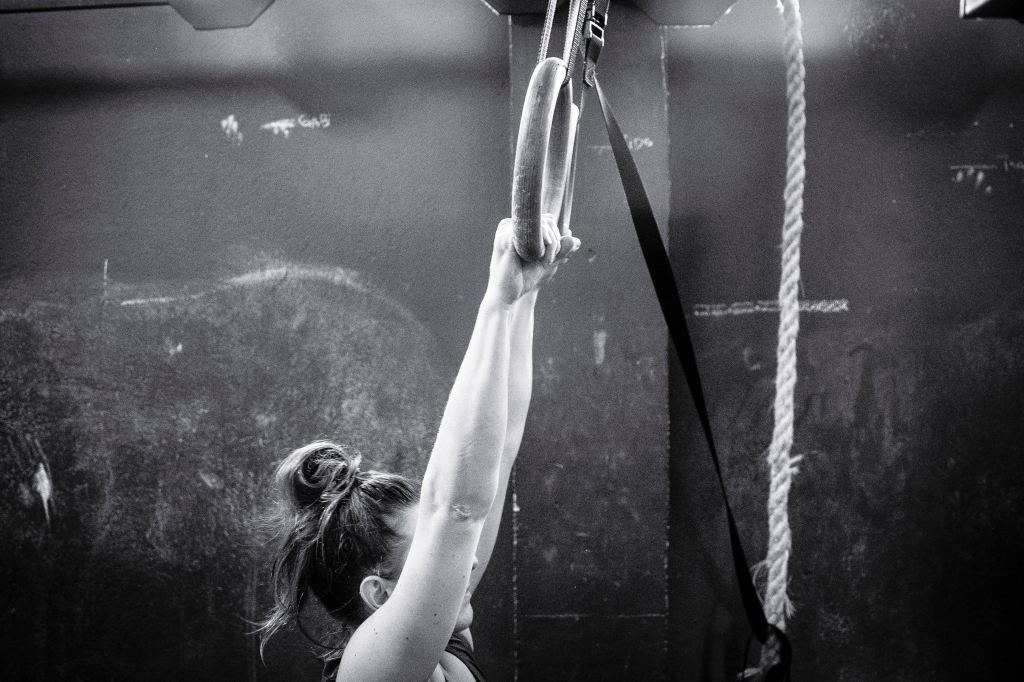
Mental gymnastics
All of this is to say that I have made some incredible progress. My doctor commented that I had improved movement, mobility, and function since last he saw me. I know, thanks to my trusty Oura ring, that I am now doing 8,000 steps a day whereas a year ago, a good day was 3,000. I am able to work full time, take care of my dog, cook, clean, live independently. That seems like a simple sentence but when I put it in the context of memory and realize I was completely paralyzed FIVE TIMES in the last 18 months, the above statement holds greater significance.
Today however is a really bad day. In isolation I could be easily overwhelmed and emotionally highjacked. My left leg buckled for no reason multiple times. Always on high alert for falls, I am even more cautious today. I am stiff. My feet won’t point. I’m standing and leaning on counters, unable to handle a balanced stance. I’m in pain. I’m battling the need to move to ease the discomfort and stiffness with the all-consuming want of melting into my couch. Amidst the rough day, I force myself to halt the downward mental spiral. I hone in on small things and add those up too — not just the pain, not just the suffering.
Today I had four work meetings on camera before noon. I made a delicious vegetarian Mediterranean meal that was fantastic. I took Oyster outside twice. I cleaned my kitchen. I made travel plans for my upcoming international escape. I tried to tame my insane mass of curls on my head (and failed) and remembered that just a year ago, I was bald. I am writing this update. I still got it done. I’m ok, tomorrow is a new day. Good or bad, come what may.
The mental gymnastics is the back and forth. Happy and sad. Conquering the world and improving, only to fall or to fail at a task. I feel powerful and I feel powerless. I feel grateful for the help my family and friends provide and resentful that I need that help, that I need them. I’m independent but only with the village I’ve cultivated pitching in on a regular if not daily basis.
I no longer think I was dealt a crappy hand. I think the hard thing is to realize that I never had safety, predictability or control. What I did have, was the illusion of them. I have no guarantee that tomorrow, I will walk. I can only do today, what I can do today.
Like I said in the beginning, I think that is me getting a bit closer to acceptance. A bit nearer to happiness. And a tremendous step forward in healing.
 My Chronic Library
One response to “The Mental Gymnastics of Chronic Illness”
“Thoughts are not facts.” I like that. It’s similar to my self-talk, “But is it true?” For instance, my husband complains I always make us run late. But is it true? I’m feeling a bit underappreciated. But is it true? I worry that we haven’t spent enough time with our grandchildren. But is it true? Thank you for ONCE AGAIN putting into words things that are so relatable though we’ve never even met, and I think our life stories would be very different. You really have a gift for that!
LikeLike