
When I was able bodied, I never thought about disability beyond holding the door for someone with a walker, wheelchair, or cane. But even that was a broader “do the right thing” not specifically related to individuals with disabilities. I would hold the door for any person, because it’s polite. I noticed (minimal) representation in TV and film but never thought about how the character’s disability impacted their life.

It never occurred to me to wonder where individuals with disabilities could go with ease and comfort because barriers to them were not barriers to me in my able body. I saw handicap parking signs, ramp entrances, and elevators but never thought about that experience, how buildings are designed, what goes into accessibility. I noticed their existence but nothing more.
I didn’t think about activities people with disabilities could or could not access. It didn’t cross my mind how they use a toilet, take a shower, get into and out of bed, do their laundry, transfer into a car. Or how they are treated in public, on airplanes, or by children. Now I see a character in a movie or on TV in a wheelchair and think “do they live alone?” or “I wonder how they got to work” or “where don’t they go, but wish they could?”
It’s an odd shift to say the least. I now imagine inner struggles and wonder at their triumphs and tribulations.
As my mobility changed — drastically since 2020, I’ve learned all of these things for myself. I’ve been forced to adjust, to acclimate, and to acquiesce.
Things cost more
Did you know handicap or wheelchair accessible seats at Playhouse Square in Cleveland’s theatre district cost more? Why, in the U.S., are we charging individuals with accessibility needs more to have the same experience? And more importantly, why is that ok? When I went to see Hamilton again in 2023, the “accessible” bathroom meant it was on the first floor and had grab bars and room for a wheelchair. It did not mean the transition from hallway to bathroom was smooth (it did in fact have a large lip) or that the door had a powered button. The “accessible” manual door presupposes that the person in the wheelchair is accompanied by an able-bodied individual who can hold the door and is traveling with the individual to the toilet. I called Playhouse Square to share my experience, they gave “I’m sorry” platitudes but over a year later, nothing changed. My feedback didn’t matter. In my experience, most theatres do not have a truly accessible toilet. I have yet to see one in any country with a powered door. Last year, my mother purchased tickets to see Pink in concert at our large arena in Cleveland, and those seats had a premium cost as well. When calling to adjust my friend’s tickets for an upcoming author event, I was told they had plenty of accessible seats, but I should have asked for accommodation sooner. I kindly informed the man that as the person with the disability, I was only recently invited to be my friend’s guest and it’s short sighted that she should have known she would invite me to this particular event out of her series months ago, in order to provide accessible seating.
This is absolutely a United States issue because our accessible seats at London theatres last September, cost less, were better situated with proximity to toilets in mind, and the experience of entering and exiting was well sorted by their entire staff. The website at the London theatres we went to even stated how many steps to enter, how many steps there were to each level, and listed distances to and from specific locations. When we arrived at the box office, we were met by house managers and assisted to our seats. Good customer service and equitable access to entertainment is possible if it’s a priority. It is also palpably felt when it isn’t.
If I book a flight now, I need to pay more to be able to choose my seat because I can’t gamble on a middle or window seat at the back of the plane. Last year, I flew Southwest Airlines for a lot of my trips to avoid this issue. While my mobility aid flies free, I check my baggage so the individual assisting me through the airport isn’t also responsible for my bag. For my courtesy, I pay for that checked bag despite being an expert packer. I did three months in Europe in a carry-on suitcase, I can certainly pack efficiently for a long weekend.
I also tip the people pushing my wheelchair through airports. But on my return trip from Wisconsin last November, the wheelchair attendant informed me during the entire process that she really appreciated tips from people she pushed because her job was so hard. I was stunned. I am an outspoken person and thought of correcting her on her lack of tact, but I needed her, so felt absolutely silenced.
Airport screenings
No two airports are created equal, and no two TSA agents are either. I have been patted, swatted, poked, and prodded by TSA in the name of security. I’ve been asked, “can I just stand a little bit?” and “are you sure you can’t walk?” As a former federal government employee, I know how much red tape, bureaucracy and nonsense exists in our federal agencies. Who do you even complain to? The process is demoralizing and offensive in the name of safety.
I regretted changing my last name the moment after I did it when I married. And I am still paying for that ill-advised decision battling my way back to Global Entry and TSA Precheck with my restored maiden name.
Moral of the story: never change your last name if you are enrolled in government travel programs (or really ever).
Take me at my word
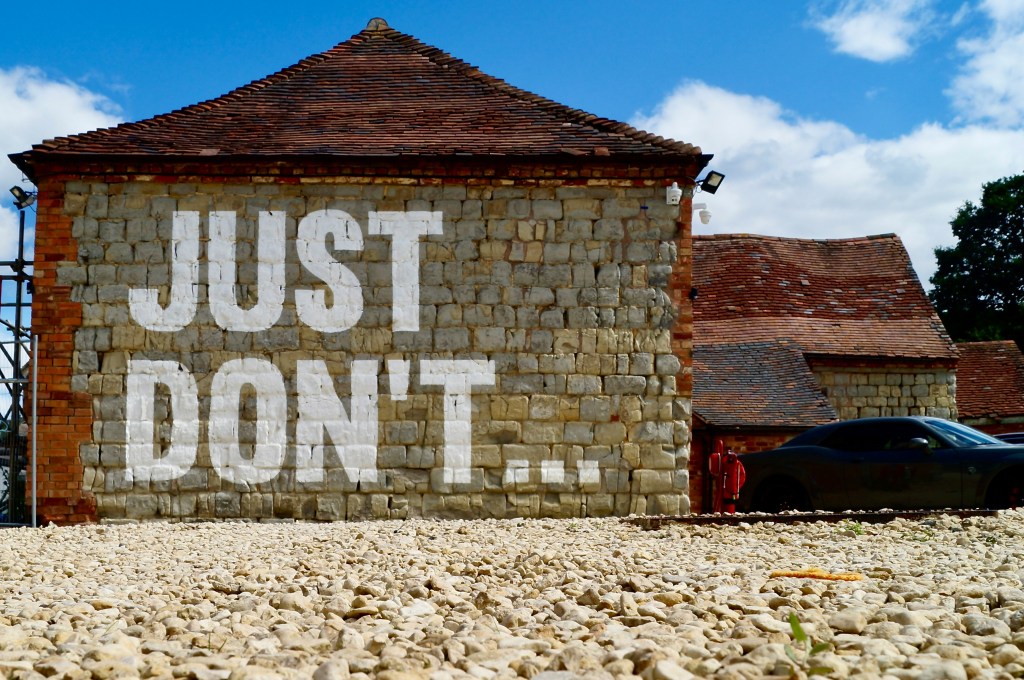
Let me be abundantly clear, my mind and brain and executive function are fine, it’s my legs that don’t work all that well on a consistent basis. And yet, my disability implies lack of function, ability, or decision-making capabilities to others. People don’t take me at my word. I am asked a question, I answer, and nine times out of 10, the person says, “are you sure?” I should not have to work harder to make you feel comfortable with the assistance offered, denied, or accepted.
Disability makes people uncomfortable. They don’t want to do the wrong thing, say the wrong thing. I get it, there are land mines at every turn. But a good rule of thumb with anyone, regardless of their physical ability, is to take them at their word.
I promise anyone interacting with me that I will say what I mean and mean what I say.
Professional life
Have I felt supported during my transplant process by my colleagues? Unequivocally, yes. Have I also felt overlooked, judged, dismissed, and discriminated against in my professional life in terms of promotion and advancement opportunities? Also, yes. When I’m asked in job applications to self-identify as having a disability do I believe the company is really “equal opportunity”? I do not. Every company, job posting, recruiter, and LinkedIn post touts an inclusive culture that celebrates differences in order to be stronger and more innovative. I call BS. They want to say diversity is a core value as long as accommodations aren’t needed. As long as they don’t have to work harder to be inclusive or adjust. As long as your problems don’t inconvenience their daily operations. Companies will take credit for your individual labor in the name of their equity and inclusion but state insurmountable barriers when you ask for assistance.
In the final season of Sex Education on Netflix, the character Isaac Goodwin gives a brilliant speech about the mental burden of disability. The elevator in the school is continually broken and on the day of the final breaks down yet again. Surrounded by his peers, from his motorized wheelchair, he talks about the inherent privilege in getting to go to class to take a test. His peers get to worry about taking the test and he is stuck worrying if he will even be able to get to the floor, get in the room, and be able to take the test at all.
At work, some might be worried about what outfit to wear, while I worry if I can get there, what mobility aid to bring/use, will I have the stamina and energy in the day to interact and do my job, and will I be judged for looking different? Oh yeah, and I am also worried about what I am going to wear.
Forced gratitude
My personal agency is diminished because I depend on so many people. If someone is doing something to help me, I’m at their mercy, their timeline, their ability. It’s an awful experience to feel stuck, to feel silenced. I have a fierce inner monologue at times, and I think “what would I say right now, in this situation, if I didn’t need this person to help me?” Inevitably, I feel depressed following an interaction like this.
I have wanted people to leave my home after offensive confrontations. On numerous occasions, had I been able, I would have left a dinner, a gathering, a party, sooner than my ride. I feel a burden when I have to ask for something I deem inconsequential or easy. It’s easy to them but a mountain to climb for me.
My conditioning is to be grateful. Stay silent, don’t rock the boat. They might not help you next time.
It’s the loss of choice I resent, not the assistance offered.

It’s not all bad. I often (the majority of the time!) feel profound joy and gratitude for those who help me. I have been reassured by many that I am not a burden.
Travel, airports, theatre outings, and professional life are all different than they used to be, but they aren’t unattainable, and they certainly don’t lack for joy. They aren’t lost causes. They just all take considerably more effort. And once, just once, I wish it were easier. I wish different didn’t mean battle and fighting as well as all other violent analogies. I wish someone else was advocating for me, fighting for me, battling for me. It feels that advocacy is always personal, always my burden.
I’m wary of my posts — this post — coming off as one big complaint. But people don’t talk about this and probably, unless forced, don’t think about it either. I know I didn’t!
I want to be an advocate for change and progress. If I start a conversation, maybe it will spark awareness in someone else.
 My Chronic Library
3 responses to “The Disability Tax”
I think it is healthier for you (and the world) to air your concerns. I see your words more
LikeLike
Ooops…got cut off. I think it is healthier for you (and the world) to air your concerns. I see your words more in that framework. These concerns are not just about you, but for anyone who does not fit into the defined world of institutional expectations.
My book group is reading Country of the Blind by Andrew Leland. It is a memoir of sorts by Leland who has a progressive visual condition. It really has me reconsidering my language and understanding of sight. It covers history of blind culture, role of blind culture in so many discoveries. I think you would find it an interesting read that supports your frustrations and concerns.
Thanks so much for your honesty. It is key to change.
Joan Callahan
LikeLike
Thanks for sharing this! I always want to better understand people’s experiences and much of this was new to me or a new perspective. I think you are advocating for others in being candid and talking about these things and your feelings about them. It’s really eye opening. I am looking at things through this new perspective. Also, I think you’re right that people can be uncomfortable or they can over-offer (my own made up word) in helping. I’m sure I’m guilty! In Lebanese culture, you offer food three times (despite denials) because of a cultural understanding that this is polite lol. That’s a whole other discussion, but it just was so funny when I had to explain this to my mother in law (while also trying to guide my mother to not keep giving her food!)
OK I’ll get back to whatever nonsense I was doing. I think I’m supposed to be in a meeting soon. Death by meetings… 🙂
LikeLike