
My immune system turns two years old tomorrow.


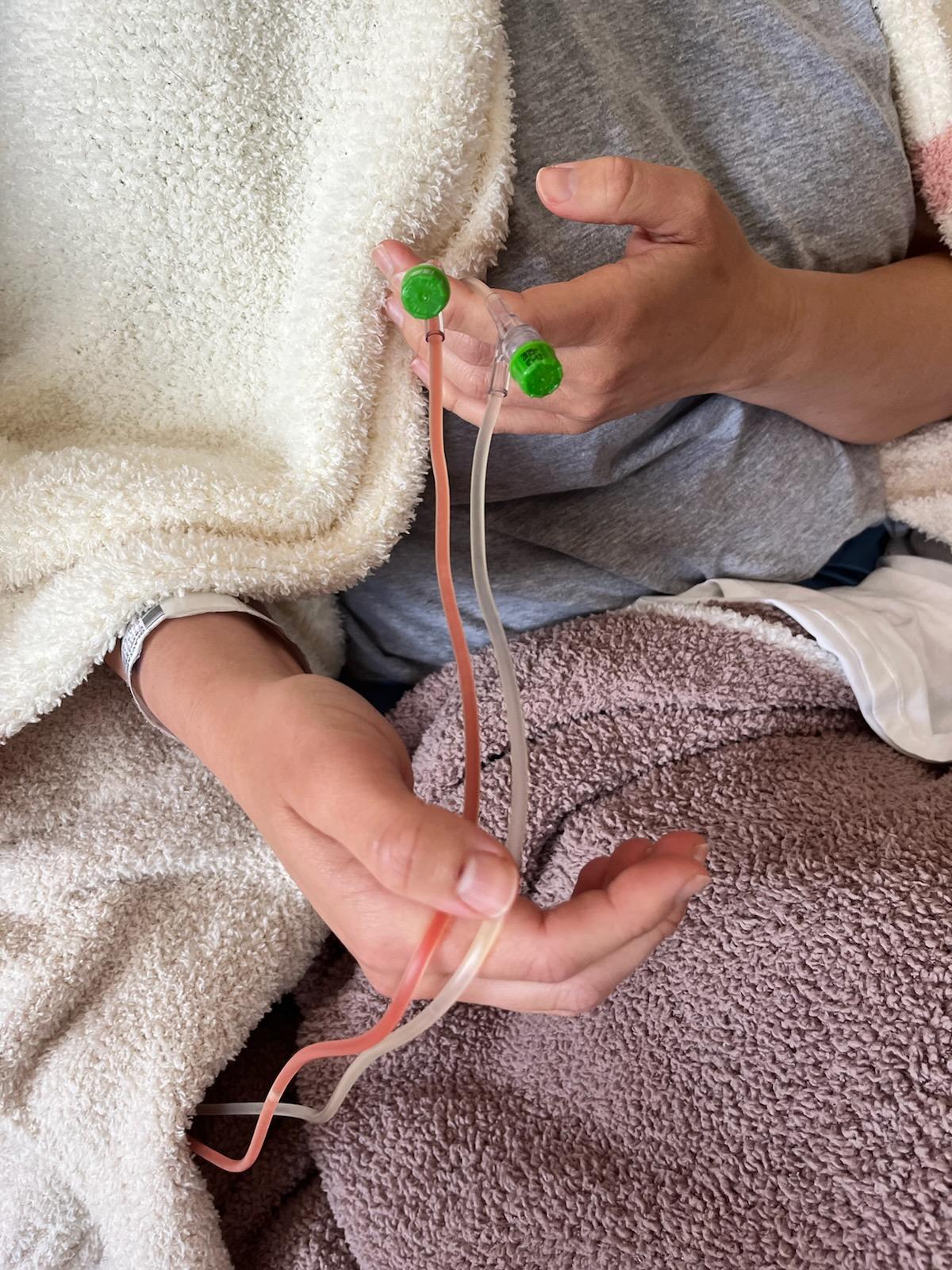

Two years ago, I was as close to death as I’ve ever come in my lifetime. Gearing up for the worst week of my life. I was hanging on with plasma and blood donations, taking every drug under the sun, and having lucid dreams about eating a peanut butter and jelly sandwich.
Time is relative
Time is the craziest thing on this planet. Six days of chemotherapy is not the same as six days on vacation. 19 days admitted to a hospital without fresh air or the feel of sunshine, is not the same as 19 days traveling Europe on my life sabbatical. One year where I learned that HSCT was an option to treat my MS, underwent transplant, got a divorce, and rebuilt my life (also known as 2022), is not the same as the year I moved from Los Angeles to Chicago, started graduate school, made an entirely new group of friends and began a new job. May through July of 2022 seems longer than any other stretch of time in my life. Two years have passed since my stem cells were put back in my body to rebuild bone marrow and my immune system, it seems like a lifetime ago and yesterday all at once.
Everyone wants to know if the transplant worked. It’s one of the first questions I get asked by friends, family, and colleagues. I also get asked how I’m doing. A seemingly innocuous question, but I get tongue-tied depending on the question and its implication.
You see, if asked, “How is life?” I would answer that my life, barely recognizable to that of 2021, is absolutely amazing! If asked about my health however — how I’m feeling, transplant, MS — I might start to cry. Healthy people in my experience can’t fathom a life of chronic illness. The world wants a comeback story. They crave the one-in-a-million story. People are not comfortable with maintenance not improvement, getting worse, daily struggles, unpredictability. I’ve realized the world wanted HSCT to be a cure for MS more than I even did. Most people though not all, don’t understand how unpredictable my body is even now two years later. I still have MS. I still have stable MRIs. I still have neurodegeneration with good days and bad. I still have mobility challenges. I also haven’t been on a disease modifying therapy since February of 2022. I see improvement all the time. I have very little fatigue and no brain fog. I am still me. Sarcastic, dark humored, witty, chatty, inappropriate, me.
And here’s the thing: I would do it again. Knowing then, what I know now, I would still make the same decision. So here are some lists — I love a good list — that encapsulate life, health, lessons learned, and things I’m working on.

What did you think about HSCT before beginning and how does that differ from what you know and believe now?
- I was terrified of the chest catheter more than chemotherapy and the chest catheter is no big deal and an absolute game changer whereas chemotherapy is the sneakiest, cruelest, most demoralizing drug. You can’t even see the scar where my chest catheter was, and yet, two years later, I am unsure if my body will ever recover from the trauma of chemotherapy — my bladder certainly hasn’t.
- I logically knew HSCT wasn’t a cure for MS, but I really really really hoped it was, and that I was that one-in-a-million miracle. HSCT is seriously traumatizing, and recovery and healing are nonlinear. I wanted certain, measurable proof points of success, and they just don’t exist. I will only know its successful looking back, five or ten years down the line.
- I thought there was a clear path forward during medical experimentation and clinical trials. There isn’t. Despite having the kindest most brilliant medical team, they’re human and I am part of their learning curve. I have never, in the last two years, had the privilege of taking a back seat in my care coordination and recovery. I have advocated and fought and communicated every step of the way. I have never been allowed to just be a patient.
How are you redefining success and health?
- I had a narrow and limited view of health, healing, and happiness. I thought health equaled being able to walk again with ease, just like I had before diagnosis. I thought healing meant I would resume the mobility and life I had. I thought walking and my old life restored would bring happiness. The truth is, in 11 years, I have never accepted my diagnosis of MS. I never fully grieved the loss of my mobility, and I tied my self-worth, desirability, and sense of self to walking. And in doing so caused myself immeasurable self-harm. I thought I had control, and I thought my deterioration was my own fault. That’s a lot of weight to have on one’s shoulders. In trauma therapy I have come to redefine those things. Maybe my cure for MS is accepting that I have it. Maybe my narrow and stringent view of “health = walking” dismissed the fact that I am mentally and emotionally healthier now than I have ever been. Happiness is not marriage, the perfect job, or one thing… like mobility. Happiness is quiet, a calm and a non-reactive nervous system, being truly known and seen by my friends; it is simpler and transient. Happiness is not constant; it flows in and out.
- A bad day used to be a forgone conclusion and evidence of deterioration. I was getting worse. My life was over. Now a bad day, is a bad day — one day in a lifetime, 24 hours not a pattern. My bed remains unmade, dishes are left dirty in the sink, I order Door Dash even with a fridge full of groceries, and those things occur without shame attached. I play with my dog and am reminded that today is just a day and tomorrow starts anew. Having an unpredictable body means it can be a good day too, not just a bad one.
- I wanted people to understand not only my illness but my daily experience as well. I wanted them to inherently mind read and act accordingly. I needed their advocacy, but I didn’t want to give them a script. Now, my boundaries are my boundaries, and I will protect my physical and mental health at any cost. I don’t waste breath trying to make people understand if they aren’t interested. No is a complete sentence and nobody needs or deserves an explanation that I am unwilling to give. If people take the time to ask the question. I will take the time to tell the story.
Any life lessons from 11 years with chronic illness?
- I am uninterested in small talk if you owe me an apology. My mental and emotional health is hard-won and worth protecting.
- I am not a burden to those who love me.
- My ability to walk is not tied to my self-worth.
- I was never asking too much; I was asking the wrong people.
- MS is one thing but not my defining characteristic, my entire personality, or even the most interesting thing about me.
- The right therapist will change your life. I have learned more about acceptance in four months of trauma therapy than I ever did in previous years of cognitive behavioral therapy.
- I was living in the past, angry at my present and completely neglecting my future. Now I have photos of me, my mobility aids, my shaved head or pink wig, and life from the last two years prominently displayed in my home. Life right now is beautiful and good and yes, messy and unpredictable, but wonderful all the same.
- I’ve become slightly addicted to tattoos. They are a way that I have autonomy over my body. I love each one.
Drawing the life I want into existence
Ever heard of the children’s book Harold and the Purple Crayon? I hadn’t, but I bought it, read it, and now think about it on a daily basis.
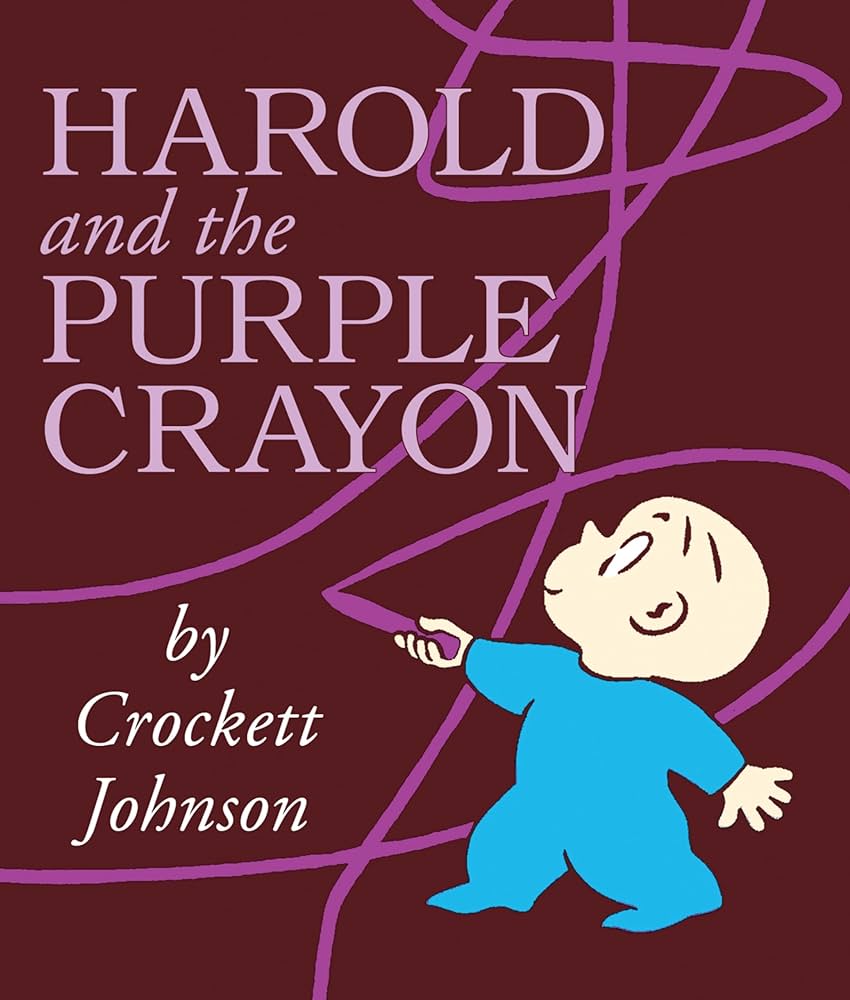
I am a creative, imaginative, vivacious person but I realized along the way, I lost my imagination when it came to ME, to my life, to my future. I was so entrenched in a life of illness and increased disability, I forgot how to think about other aspects of my life and future. In the book, Harold wants to go for a walk, so he draws a path. He wants shade, so he draws a tree. He wants a companion, so he draws a dog. You get the point. I am working to identify what I want and imagine and create and draw the life I want to live in this body, with this mobility, with this health status.
In case there was ever any doubt that my dear friend Maggie is the love of my life, upon telling her this story and debriefing with her following therapy, she purchased a box of all purple crayons and a blank sketchbook. In her birthday card to me this year she wrote, “Each new step and decision shapes the future you have yet to draw. If your purple crayon runs out, I will always be around to replace it.”
 My Chronic Library